Control the Controllables
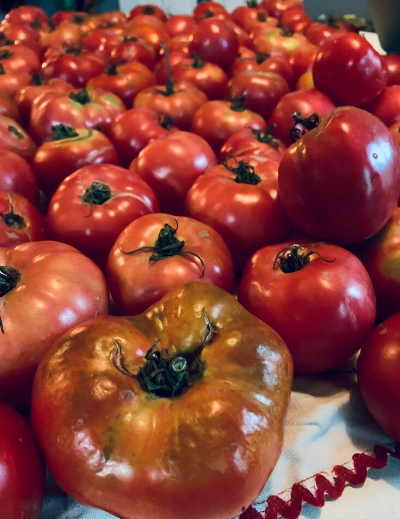
This week’s melody on the farm was this: Control the Controllables
It has a better ring to it than “ignore what’s out of control.” That’s the optimism we need to propel us through this tricky period, rounding the corner of our long CSA Season.
As late summer matures into autumn and our warm season crops lose momentum, it’s not unexpected to feel a bit of anxiety and uncertainty about the bridging of the two seasons. We’re getting all we can out of the summer harvest to allow for our fall crops to get established, ideally keeping consistently bountiful and diverse boxes packed week after week.
Our cucumber tunnel is dying back at this point. This may be our last week including them. Late season cucumbers can be tough and blemished, but they’ll remain juicy, crunchy, and refreshing however you crack into them. We’ll sometimes treat these like a squash-even peeling the skin, splitting them open horizontally, and scraping out excessive seeds.
Our older squash plants are petering out after a productive couple of months as well. Zucchini/Yellow Squash fruits and foliage are getting to be pretty funky-looking (excess rain didn’t help). We’re keeping a close eye on the winter squashes. Butternuts and Delicatas are right on the brink of sufficient ripeness. Immature Butternuts are striped with splashes of green. As soon as those stripes fade and all green has ripened orange, we’re good to go. Delicatas mature in the opposite way. Green stripes form as they ripen. When the rest of the gourd starts to yellow a bit, they’re ready to pull.
We’re continuing to direct sow fall crops including various greens and root vegetables while nursing cool season brassicas like broccoli, kohlrabi, and cauliflower seedlings in the nursery. We were also able to get some cover crops sown into unused or cleared summer beds. Allowing our beds to be bare and uncovered for long periods is bad for our soil’s health. We plant cover crops to keep the soil microbiology active, to out-compete and suppress unwanted weeds, and to prevent erosion in rows not actively being used for whole food/cash crops. This month, we’re sowing peas and oats. In September, as other beds empty and clear, we’ll plant other cover crop varieties like Winter Rye and Wheat.
“Human-scale” Farming
The bounty of summer’s peak continues to impress and overwhelm us here at Morckel Meadows and we remain sincerely grateful to have this appreciative community of supporters with whom to share the abundance. Thank you to everyone for your words of encouragement and grace last week. We’ll be sharing much of the same traditional summer vegetables with a few variations and adjustments.
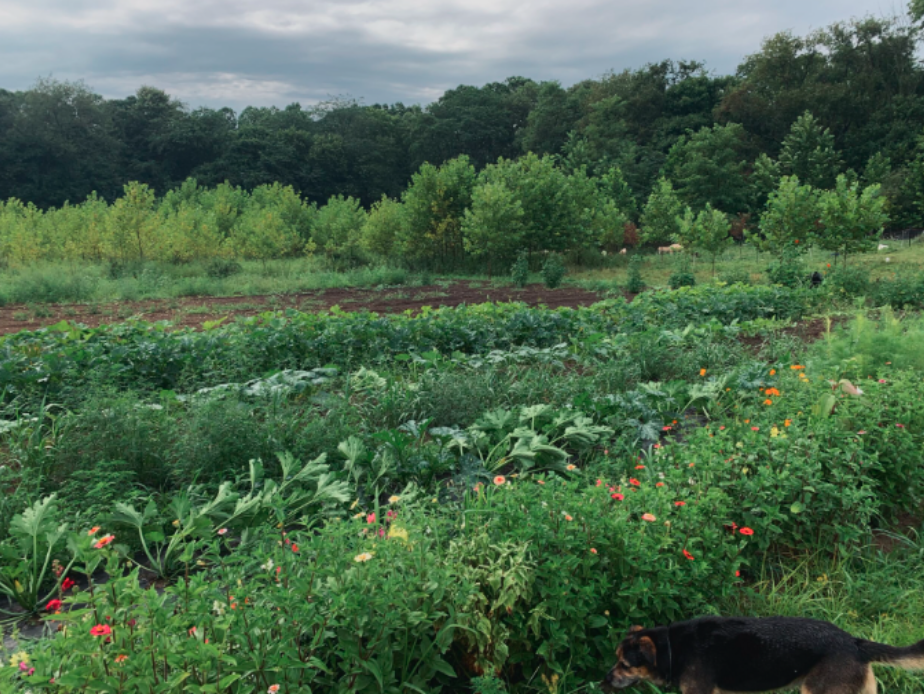
When we first started to visualize how to scale up our project, it was important for us to explore how to grow and maintain our production on a “human scale.” At the least, we wanted to test and push the boundaries of small scale vegetable production. We all generally accept that training for, and running in, a marathon is a healthy endeavor, even though the race can feel torturous at the halfway point. There’s growth potential in the preparation, during the race itself, and as we reflect back on the experience as a whole.
“Human-scale” farming, at its simplest, is an attempt to design and work a farm & garden using as few industrial inputs or processes as possible. This is “tractorless” farming. This is 19th century market gardening. What can we reasonably accomplish with hand tools avoiding fossil fuels? What is the appropriate healthy balance of efficiency and productivity?
Farming, especially on a small scale, is objectively hard work, but it can be purposeful, mindful, and meaningful work. Our approach has been idealistic, we’ve had to compromise here and there, and we frequently have to remind ourselves of its privilege during tough times, but we are learning a lot about the limits of what a few hands can maintain and produce. Because of your investment and participation, we’re gaining invaluable experience that will inevitably assist in our goals of health, productivity, and sustainability for ourselves, our land, and our community.
Our fruits are ripening rapidly. This is great news for tomatoes and peppers. The mild peppers get sweeter with the color change and the tomatoes get juicy and consistently red ripe throughout. The rapid ripening is less exciting for our beans and squashes, however. We all may need to get creative and motivated to ensure harvests of overgrown green beans and club zucchinis are appropriately used or preserved.
We’ve been freezing lots of zucchini. We often peel away the skin with a potato peeler, scrape out the seeds with a spoon like you would a winter squash, then slice up with a cheese grater. When we have a pile of grated squash, we will usually squeeze it out with a permeable kitchen towel or cheesecloth. After we get as much liquid out as we can, we pack it up and freeze it for winter zucchini bread options. Erin loves to make zucchini pancakes or fritters! Zucchini kraut is also a thing, but we can’t claim to have successfully preserved this way, though it has been intriguing.
Halfway there!
We continue to lament the failure of our sweet corn crop. It’s something we have lost sleep over. Last week, we attempted to start distributing some passable (not impressive) ears to our home delivery shareholders and hope to share more if they’re available. We will not be keeping any for ourselves and we will not be selling any at markets. If there are usable ears, they will go to shareholders. Not everything has gone to plan this season and for the times we have under-delivered, we apologize. Happily, we’ve managed to produce a tomato crop despite our difficulties, and our other summer vegetables continue to thrive.
While our herb supply has thinned, we are hoping to make up for it with a hefty box of summer vegetables and other treats from the farm & gardens. Up to 13 different items this week!
Out in the summer field blocks, we have new winter squash varieties maturing and slowly ripening. It shouldn’t be too long before we have butternut squash to distribute. We have some volunteer pumpkin plants with big green gourds, nice spaghetti squashes fully grown and waiting to ripen, and Delicata- sort of a creamy, sweet potatoey, summer/winter squash hybrid with a tender rind.
Our big field blocks have been awfully thirsty these past few weeks. As we have discussed before, we are not organized this year to efficiently irrigate our larger gardens. We focus our attention on young plants and new seeds and rely on most mature crops to find water naturally. With our big expansion this year, we’ve had to learn to be more comfortable with some compromises being less than ideal. This has admittedly been a curse and a blessing. We’re able to avoid the temptation of over-watering (a common mistake) but it can be hard to watch sometimes. Yesterday, we finally experienced some decent precipitation. Our field tomatoes, peppers, okra, squashes & melons, beans, and flowers were clearly appreciative.
Just before yesterday’s rain, we were able to direct seed some fall greens and roots to rows in our smaller garden. We seeded Spinach, Arugula, Lettuce, Radish, and Beets. Carrots have germinated again and our indoor nursery is back in action starting cool season crop transplants just like in early spring. This week, we’ll be sharing more microgreens and hope to get better at routinely keeping these nutritious additions in our rotation again.
We’ve learned a lot this summer about what two people can and can’t reasonably accomplish on the farm. There may be volunteer weeding, watering, and harvesting opportunities upcoming as we transition and adjust our productivity. If you’re interested in helping out, send us your availability and what work you’d be good at and we will keep you in mind for when things get heavy.
Red Ripe, flavorful, heirloom tomatoes
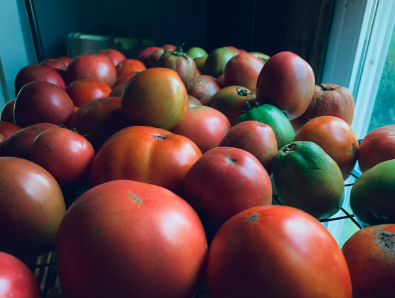
We’ve been doing a fair bit of complaining about our tomatoes this season. For many reasons, mentioned in previous email updates, our field tomatoes have been a struggle, and we have learned an awful lot. The field plants are kind of ugly and they bear some funky fruit, but you’ll receive some real juicy beauties in your CSA boxes this week nevertheless. We are confident and relieved that there will be many more to come.
Our wild blackberry patches continue to produce but this week, we were unable to dedicate the time needed to collect enough for all our shareholders. For our farm pick up folks or any other farm visitors, if you’re interested, ask Erin to point you in the right direction to explore and gather up some handfuls yourselves. Dress accordingly because it gets thorny!
For many reasons, we feel less optimistic about our sweet corn crop week by week. Concerning this particular crop, we’ve had no shortage of both bad luck and unforced errors. We had mentioned weeks back that much of the stand had been toppled in a storm, only to miraculously rise back up and restore some hope. Now we feel less hopeful.
We concluded early in the season that fencing in our operation in an effective way wouldn’t be realistic this season. This was admittedly risky, but we were confident that critters would find enough food in our wild landscape to be less interested in our cultivated, pooch-patrolled gardens. We lucked out this spring and managed to avoid many critter issues. But it seems that as soon as our tired stand of maize finally produced some of the sweetest grain for miles around, the critters couldn’t resist.
So now, after the crop got knocked down, the ears struggle to fill to an adequate size, and we’re sharing the field with some inconsiderate wildlife. They’ve done some damage. Again, hard lessons learned here. Unfortunately, at this point, we’re fairly confident we won’t have a surplus to bring to any market, but we’ll still hold out hope that we will have something to give to our shareholders if/when the time is right.
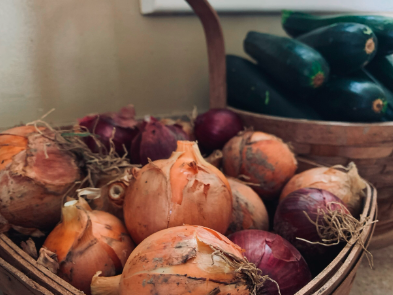
Thus far, we’ve been providing fresh onions each week, often pulled and peeled the morning of delivery. As we are continuing to prepare our gardens for late summer/fall crops and as the sun continues to shine with any precipitation remaining absent from forecasts, we decided to pull the rest of our onion crop and cure it in the sun for long term storage. The end product is a fully-skinned, shelf stable onion, typical in grocery stores. They won’t need to be refrigerated and ought to last a long long time.
We have microgreen trays cooking in the nursery as well as fall garden seedlings. If all goes well, we ought to have some fresh micros to include in our boxes next week. Just when it’s really starting to feel like peak summer, cool season crops are back on the agenda.

Midwest Midsummer
Cucurbitaceae is the gourd family consisting of many of the mid-late summer vegetables we collectively appreciate in the midwest. Cucumbers, Zucchini, Squashes, Pumpkins, and Melons are all family members with vines requiring a trellis or structure to climb onto, or plenty of ground space to creep and travel about. If you’ve personally grown any members of this tropical family, you’ll know these vines produce abundant fruit this time of year leading to prolific harvests, to be reflected in your week 10 CSA boxes.
We grow both Summer Squash and Winter Squash. Our Courgettes (zucchini) and Yellow Squashes are examples of summer squashes. Winter Squashes on our farm include Butternuts, Spaghetti Squash, and hopefully some Pumpkins. Our first Butternut babies have just fruited this week!
Simply defined, summer squashes need to be eaten in the summer because they don’t have the long term storage capabilities of a winter squash. Because they’re so prolific, but don’t have the thick rind that allows them to maintain freshness beyond the summer months, summer squashes can take some effort and creativity to fully utilize. This week, consider casseroles, boats, pizzas, kebobs, and breads. If you’re ambitious, now’s a good time to think about getting into pickling and canning if you haven’t already. More simply, if you sense your Zucchini is getting a bit rubbery, the easiest thing to do is quickly shred and grate the squash, form it into a ball to squeeze out its excess water using a towel, cheesecloth, our your bare hands, and freeze it in a sealed plastic bag for winter bread making. Please don’t hesitate to share your ideas and creative arrangements with the CSA!
We are still patiently waiting on ears of sweet corn to appropriately sweeten and swell, but it’s happening. Field tomatoes are taking their time to ripen as well. Last week, we were able to distribute a few heirlooms to our Sunday members. This week, we hope to get some out to Wednesday folks. We have no shortage or ripe cherry tomatoes, but as has been mentioned before, our full size field tomatoes are having a tough season.
We hope everyone enjoyed our wild blackberries last week and there are more on the way! Though this whole garden project requires a lot of focus on single season, annual crops, we really like the idea of developing a property with perennial, permacultural properties as well. Our maintenance and admiration of our wild blackberry patches is an example of this appreciation. Someday, we hope to have native trees and bushes with edible fruits thriving throughout our property, providing biodiversity and low maintenance simple harvests. For now, as long as our humble patch of wild fruits provide, we will work to harvest and share what we can.
This week’s box will look very much like last week’s- another reminder of the seasonality of CSA participation. As we collectively experience and benefit from the short seasons of many of these familiar fresh produce varieties all grown right here in central Ohio, let us also be reminded that these are traditionally available year-round in grocery stores, and subsequently reflect on what that persistent availability means regarding our popular national food supply chain.
When we see a Zucchini in the produce section in December, let’s remember this time of year and ask: “Who grew this? How well were they paid? Where did this come from and how did it get here?” For now, let’s all eat fresh summer squash until we’re sick of it and wouldn’t want any more until next summer anyway!
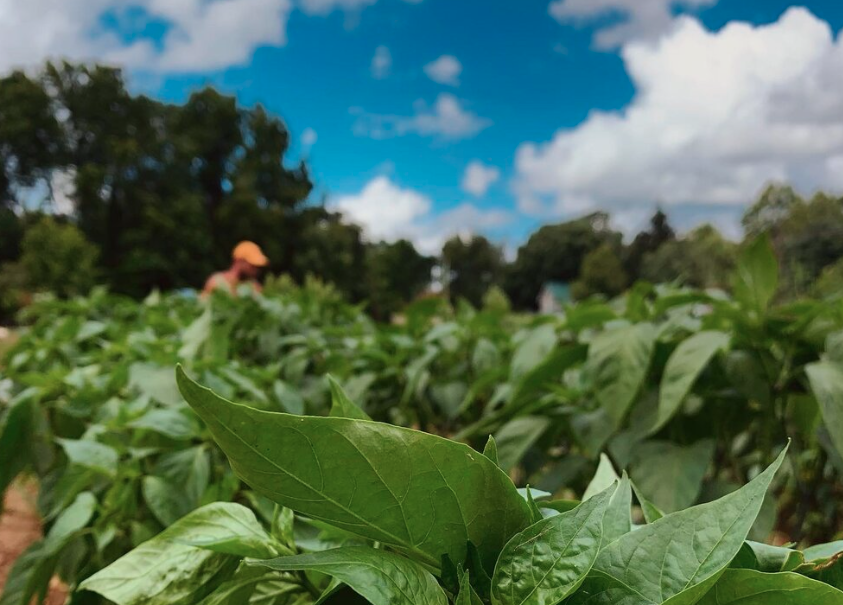
A nostalgic time to be in the garden
It’s a nostalgic time to be in the garden, engaging the senses and prompting memories, reminding many of us of childhood with Grandma or Grandpa: the smell of dewy tomato bushes, the peel and squeak of shucking sweet corn, the snap of a string bean.
We couldn’t be more impressed with, or surprised by, our sweet corn’s recovery this week. While some patches are still reluctant to rise up, we are back to having an impressive and satisfying stand. Stalks are five to six feet tall and their ears are filling up plump with milky sweet kernels more and more by the day.
Our first summer squashes have arrived. Hundreds of Zucchini and Yellow Squash plants ought to be an adventure to keep up with! We really prefer tiny, tender summer squashes but as their production becomes inevitably more challenging to pace, it’s more than likely we’ll have big old club zucchinis available too for members to grate and freeze for winter muffins, breads, and pancakes.
Our bean bed is taking off as well. We have three varieties with maturity dates offset by a couple of weeks. This week, we’ll mostly be sharing green and purple beans, with longer, waxier “Dragon Tongue” beans coming on a little later. Like squash, we prefer to get to the beans when they’re young and tender. Though nothing will go to waste, discovering the occasional overlooked old timer bean pod is a reminder that we are nearing pickling and preservation season.
Speaking of pickles, cucumbers will continue to be included in shares as long as we can keep the vines healthy and the fruits off the ground. They are really enjoying the high temperatures and consistency of our hoop house. We are new to growing under plastic, and it has been fascinating to witness and experience.
We’ve been spending some time scratching up our legs and forearms in the brambles, hoping to gather enough wild blackberries to share with y’all and we think we may actually pull it off! We’ve been grooming our property to make these patches more accessible year after year and it seems to be working out. Black raspberry season was short and less productive but our blackberry patches are thriving. We love throwing a cup of fresh berries into a mountain pudding. Don’t hesitate to share with us how you’re using your wild berries!
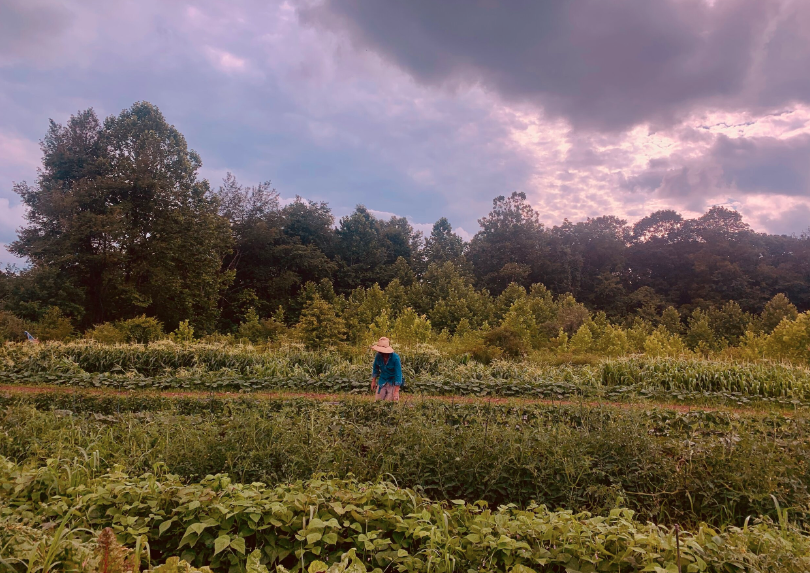
High and low temperatures, high and low spirits
Our towering, tasseling golden sweet corn stalks tumbled and flattened in a matter of minutes this week, bringing our morale down with them. Sweet corn is an undeniably satisfying crop to grow. It is historically miraculous, seeming to gain half a foot of growth daily this time of year. We selected fast growing, early maturing varieties this season, got to planting relatively early, and were satisfied with their aforementioned exponential summer growth. But this week, as she is know to do, Mother Nature threw us one of her infamous windy, fast-breaking curveballs.
Our row crops live in 50 foot or 100 foot long, gently sloping columns, each with four feet of width. Our earliest corn planting was established in a 50 foot long row in our spring garden. The short-lived severe windstorm we experienced this week flattened this particular row completely. In our summer gardens, we planted three 100 foot rows. The microburst left only half of these plants standing. After the hot temperatures early this week, the subsequent exponential growth of our summer crops, and the motivational optimism we experienced as a result, waking up to a carpet of sweet corn and not a forest was at least discouraging.
But it seems all hope is not lost. In the last few days, the crop has displayed a truly heroic effort to rise again and our confidence has returned that before too long, we will be busy picking ears. Thanks again to our shareholders for lending yours this week for our weekly update!
Our summer crop production continues to accumulate. It’s the time of year when it becomes difficult but necessary to constantly harvest in order to keep plants producing and catch the fruits while they’re still young and properly tender.
As you all know, we are not simply vegetable growers. We are striving to create a regenerative, sustainable, complete homestead stewarding plants and animals alike. While the focus of much of our correspondence has been in regard to our crop production, we don’t want to imply that we’re neglecting our livestock.
We continue to move our animals, chickens and sheep, to new pasture daily. Our flock of nearly two dozen sheep and lambs are happy and healthy as they maintain our biodiverse paddocks and grow naturally and grain-free.
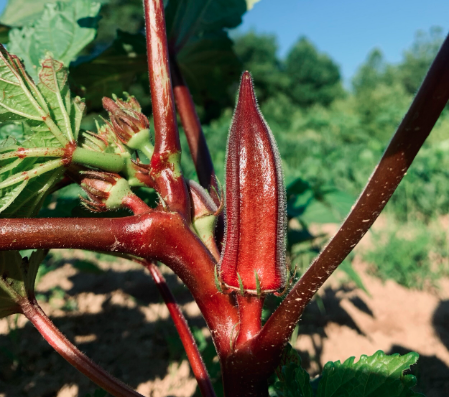
Carmine Splendor
It’s hard for us to believe it’s already July. The holiday has really sneaked up on us. We hope our friends are having a great holiday weekend enjoying good company and all of this pleasant, agreeable weather! We certainly have been. This is a famous benchmark weekend for farmers to confirm that they are on track and their corn crop is in fact “knee high by the fourth of July.” We’ve got an early crop at chest height, sprouting flowering tassles, indicating that we’ll likey have just under three weeks until sweet corn harvesting begins. No doubt it looks like a summer garden around here!
This is an exciting week of the summer as it will be our first distribution of tomatoes! This week, we’ll have Sun Gold and Supersweet cherry tomatoes at various stages of ripening for you to use in your salads and dishes. Because it’s mixed batch, don’t judge their ripeness on color alone. Leave them on the counter and when they look deep golden or orange (Sun Gold), or a standard full red ripe (Supersweet), give them a gentle squeeze and if they have some decent give to them, they’re definitely ready. Don’t be too concerned if they end up overripening and splitting on the counter (we’ll be holding on to the overripe vine-split ones), just eat them up right away.
Our summer bean rows are flowering beautifully consisting of a standard green string bean variety, a purple bush variety, and our favorite bean cultivar “dragon tongue.” When selecting varieties for a particular crop, we are always drawn to colorful cultivars that make for a diverse, vivid plate and a vibrant diet. In reality, all the beans turn green when you heat them up on the skillet, but it’s fun regardless and it certainly doesn’t hurt, while harvesting, to have all those fancy flashy bean pods pop out from the collage of green leaves and stems from where they loosely hang.
Another new summer vegetable picking up the pace is our “Carmine Splendor” heirloom Okra crop. Like the beans, we were drawn to this cultivar for its uniquely deep crimson fruit. Okra is a hard crop to keep up with, also like beans, as the plants really put out a lot of fruit quickly and persistently. The pods are best pinky-sized and tender but quickly grow to long, woody cones as soon as you look away. They are fun to harvest and the plants, impressively, can grow as tall as six feet. We recently watched “High on the Hog” on Netflix (recommended), a fascinating doc which highlights the origins of Okra and its significance to traditional West African diets and subsequently, modern African American cuisine.
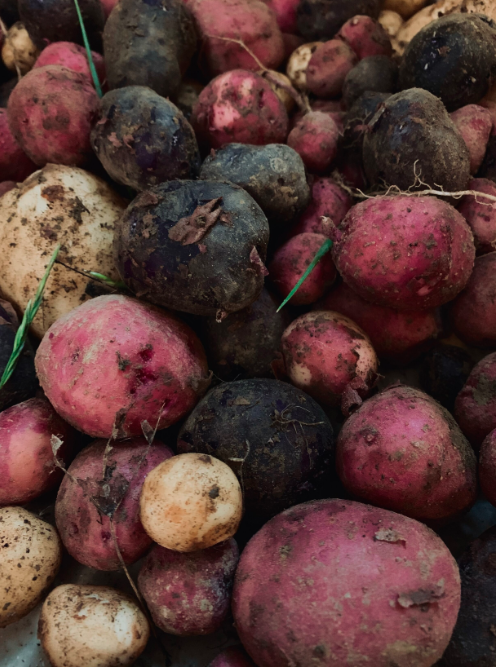
New Potatoes
We have new potatoes!
One of our favorite harvests on the homestead is digging up potatoes. Like all the other subsoil produce, it’s like opening a surprise gift. Every crank of the garden fork exposes us to satisfying spuds or depressing duds. Typically, potatoes are harvested after the plants above surface have died back and turned yellow, but digging them up prematurely and impatiently exposes “new potatoes,” with thin, almost nonexistent skin. This week, we’re digging up golden Kennebecs and red cobbler spuds. Because they’re new, thin-skinned & without any curing, they won’t have the infamous storage capacity of typical store- bought potatoes, but they’ll be creamier and deliciously fresh.
Field greens are thinning a bit as the sun continues to scorch us. Expect the return of micro green varieties in July as we attempt to fight through the heat to keep options for salad greens in rotation.
Our peppers are continuing to show off. This week, we hope to include some Shishito’s- versatile peppers that take on some heat as they ripen from green to red. We will also include Hungarian Hot Wax Peppers to compliment our mild green pepper supply.
We have decent rows of cherry tomatoes, Okra, Jalapenos & Anaheim peppers, bush bean varieties, and beautiful sweet corn stands. We are continuing to get squashes and melons in the ground. We’re getting into a tomato harvest routine, beginning with our sweet cherry tomato varieties. In the hoop house, we’re seeing our first mature cucumber fruit.
Thank you again for your support and feedback. We heard many encouraging words last week and are sincerely grateful.
From Spring to Summer
It is, at long last, the Summer Solstice. The ceremonial transition from spring to summer is officially upon us. We really love growing cool season crops and the sad truth of their inviability during the current and upcoming hot weather is unfortunate, but we will do our very best to make the transition to warm season harvests as seamless as possible. It is still true that, during this transitionary period, we must be flexible with providing some crops as available, but we are still pretty happy with what we’ll have to offer this fifth week of our CSA.
Y’all have some homework this week. We didn’t grow snow peas this season (we’re not crazy about them), which are traditionally and easily prepared on the skillet with the whole pods intact. We grew and harvested two varieties of snap peas, aptly named for the inevitable chore of “snapping” them open the pods and scrape out the sweet peas for slow cooking. Our two varieties are “honey snap” golden pea pods as well as the traditional “sugar snap” green peas. While it isn’t unrealistic to prepare them wholly podded, we recommend you spend some time to snap them open and prepare the internal pea seeds independently. We use an instant pot with a 1-3 pea-water (or broth better yet) ratio on high for 15 minutes. There are plenty of ways to steam the peas on the stove top as well, but we have found the instant pot to be a super-versatile and easy tool. Some of the pods seemed a little far-gone to us, but after sufficient preparation, they were sweet and delicious.
We have waist-high sweet corn, cherry tomatoes just starting to show some lightening color, and red okra flirting with flowering. We will keep you informed. We are happy to have summer peppers available but are anxious about getting some corn and tomatoes in the harvest rotation, but patience is a virtue. As we noted last week, some of our tomatoes are struggling to overcome unexpected persistent herbicide residue but we have fresh plants in healthy beds that are good-looking and showing off some fruit. The earlier effected tomatoes will still produce a short-lived crop soon. Butternut squash has sprouted true leaves. We have zucchini and yellow squash germinated and growing quickly. Other winter squashes and melons are in the ground with sufficient rain/moisture in the soil to get them off to a good start. Cucumbers are thriving and flowering in our hoop house and by July, we’ll be starting cool season crops in the nursery all over again including cauliflower and brussel sprouts.
We transplanted our sweet potato “slips” which we received in the mail last week. We don’t feel optimistic. These are a tropical crop and aren’t necessarily simple to cultivate up north, especially by rookies like us. We will do our best considering our inexperience with this crop and, honestly, considering the uninspiring, unforgiving seed crop we received with which to start.
First full-time job
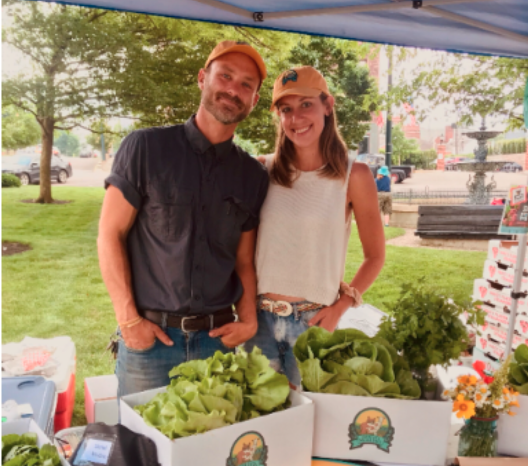
(From David) At a market this week, a customer asked “Is this your full time job?” I don’t think the question was intended to be heavy, but it lasted with me. I have surely never worked so hard or devoted so much energy, focus, or attention to any previous or current work, professional orfirst full-time job. otherwise. So maybe, I suppose, this is my first full-time job.
We had our first Saturday farmers market yesterday and were pleasantly surprised with our results. Because of your investments, and the consequential motivation to provide early, consistent vegetable production for your families, we were the first farm to arrive with Cabbage, Broccoli, Beets, Carrots, and Peppers. This made a great first impression resulting in considerable sales of our homestead surplus, which is an essential component contributing to the sustainability of this project. Thank you, thank you, thank you.
To begin this week’s update, we included a quote by Wendell Berry, an influential proponent of organic practices and a universally inspirational writer/poet to market gardeners and organic/regenerative farmers. We will elaborate in upcoming email updates and face-to-face as we have the time, as our predicament becomes more clear, but we are having issues in our summer field blocks with crops battling herbicide drift and/or persistence, effecting especially our rows of field tomatoes. We have never applied any chemicals, herbicides, fungicides, or pesticides of any kind on our property, but our summer crops are suffering regardless. Though there are many indirect ways this can happen and it is becoming more and more of an issue for modern vegetable growers, we never saw this coming. We have had professional help visit the farm, take plant samples, and conduct tests only to find the absence of any treatable fungal or viral disease. It’s a tough situation but the good news is we still have hundreds of healthy established plants with backup late plantings going in behind them, though we can expect our yields of those particular effected tomato varieties to be lower and later than anticipated. We will speak more on this in later updates, but as Wendell Berry said, “Do unto those downstream as you would have those upstream do unto you.”
We’re planting sweet potatoes as fast as we can this week! Our early sweet corn is officially knee high. Early potatoes are flowering- growing their tubers subsurface and cherry tomatoes are just about to show some color. As the young tendrils of our freshly transplanted cucumbers are trained to grip their trellises, it truly seems like you could sit in the hoophouse and literally watch them grow as cute little pickle babies poke out between limbs.
Peppers, sweets and hot waxes, are popping out of flowers all over the summer field blocks. We’re picking them young to encourage those plants to produce more, some of which we will leave to ripen red. With only a week until the solstice, we’re constantly reminded of the changing season and can’t wait to start picking basketfuls of summer fruits for your families.
Sunrise Harvest
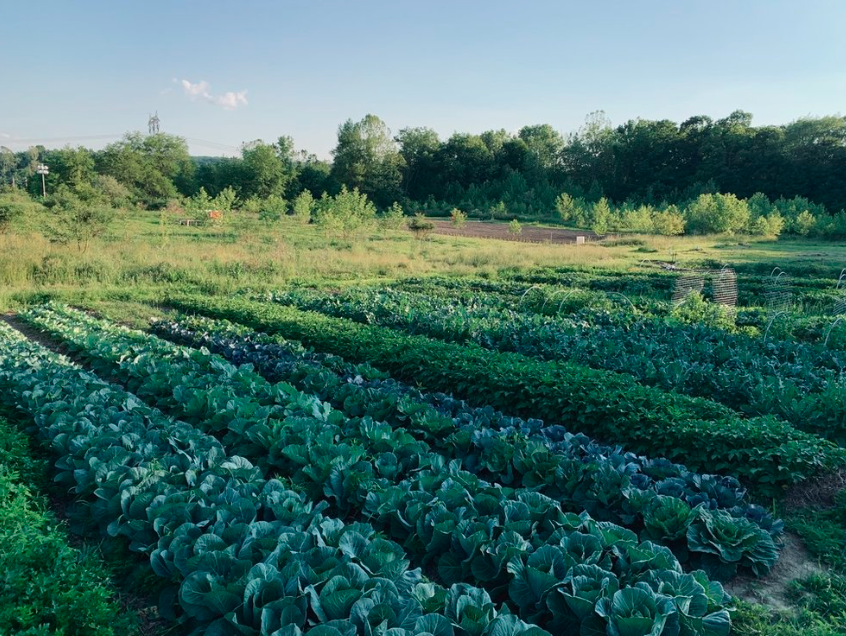
We are again up with the sunrise filling this week’s first shares! We are harvesting Broccoli sprouts, Butterhead lettuces, Redhead lettuces, Spinach, Broadleaf Kale bunches, Parsley, Rosemary and at long last, Carrots!
It ain’t easy waiting for carrots to develop roots like what we are all used to. The crop has always tested our patience, or highlighted our impatience. Carrots are hard to sprout but easy to grow. You only get one shot to pull them and the hardest thing is waiting for the right time without being disappointed. This week’s carrots won’t be babies, they won’t be monsters, but they’ll be nice. In addition to standard traditional orange carrots, we have red varieties, yellow varieties, and purple roots. We hope to give our shareholders an eye-catching, delicious bunch this week, while leaving a thick stand leftover to continue to grow and give us more root harvests in the following weeks before summer.
Unfortunately, we have to limit our egg allowance this week and can only provide each family with a half dozen. Our butt nugget production numbers didn’t quite add up but we’re taking steps to diagnose why and fix it. Some of our existing young hens are just starting to lay and we’ll be bringing new adult hens to the farm this week. Hopefully, we won’t run into this problem often this season. We appreciate your patience and understanding.
Thanks also to our Wednesday folks who came out to our very first Farmer’s Market. The weather wasn’t great, but we were able to sell some of our surplus. It was more fun and rewarding than we had even anticipated. We’re introverts and don’t see ourselves as salespeople, but it seems the vegetables sold themselves.
Our tomatoes and peppers are moving along. We have 4 inch long sweet green peppers showing off out there and green cherry tomatoes getting ready to plump up and get red or golden ripe. We’ve planted cucumbers in our hoop house, more cucurbits including squashes and melons, bean varieties, and some cultivated flowers like snapdragons, zinnias, and various sunflowers.
Our golden honey snap pea pods are filling up with tasty peas ready for us all to crack into. Potatoes are flowering- an exciting indication that spuds are forming and fattening beneath the surface. Sweet corn is getting close to a foot tall and we ought to be well beyond knee high by the Fourth of July.
We truly appreciate everyone’s kind words of encouragement and creative application of our harvests.
Happy Memorial Day Weekend
We look forward to another fun harvest tomorrow morning for our Sunday deliveries and pick ups! We enjoyed catching up with friends and meeting new shareholders last week and look forward to getting feedback from everyone about how you’re using your first items - thanks to everyone who shared pictures with us via text & instagram.
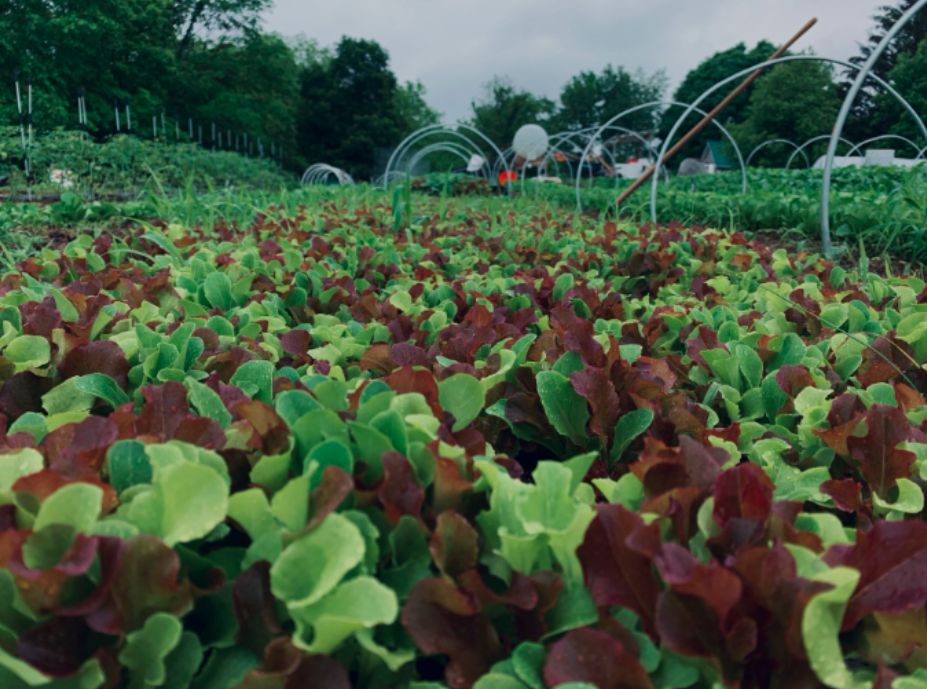
Our spring garden block is full as we have planted our last two rows with cherry tomatoes (Sun Gold & Supersweets) and sweet corn. Tiny green cherries have officially arrived- a feat we are especially proud of as they are field tomatoes without a greenhouse overhead. Our larger summer blocks are populating as well with sweet pepper varieties, San Marzano tomatoes, and Pink Brandywines. Three sweet corn varieties have germinated well and our three bush bean cultivars are off. Once our sweet corn has reached a foot in height, we will plant a circle of pole beans around the young stalks. The pole beans symbiotically fix some nitrogen for the sweet corn and the maize provides structure for those beans to climb. My great-grandfather designed his garden this way and we’ve had success with it in the past. This was a practice used commonly by Native American tribes called “Three Sisters” gardening. In addition to the maize and beans, vining/prickly squashes and pumpkins would surround the grains serving as an obstacle course deterring pests. We love to incorporate permaculture practices like these whenever reasonable and practical.
We are gradually getting beds prepared as time has allowed for squashes and melons. It is our goal to have all summer beds prepared and planted by June.
Our three varieties of cabbage are heading pretty well. Carrots, standard and colorful heirlooms, are getting close, as is green and purple Kohlrabi. Potatoes are about as healthy looking as I’ve seen them- Red Cobblers, Kennebec, and Blue Adirondacks. Sweet Peas are flowing beautiful pink blossoms that will mature to unique honey-sweet yellow snap pods.
A note on broccoli- We had to harvest our heads and florets earlier than expected because the hot weather caused them to bolt/flower before they reached their ideal size. Broccoli is challenging and we’ve certainly done our best. It is still gorgeous and delicious, and we are lucky to have a farmer friend giving us cooler space to store it, but it will not be a day-of harvest as we like. Sunday’s shareholders will be getting broccoli straight from the cooler, and we will be monitoring its freshness for our Wednesday members. Our fingers are crossed that we can keep it fresh for all.
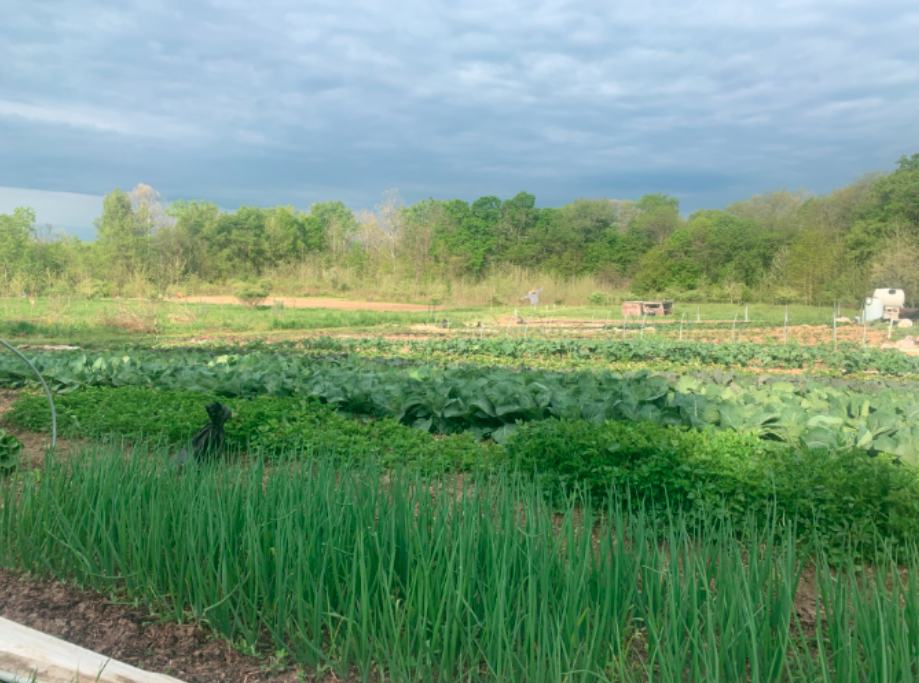
Our first CSA Harvest
We will be up with the sunrise tomorrow morning harvesting your fresh produce. David will send a text to home delivery shareholders shortly before delivery so that you’ll know when to expect the arrival of your share and can get your produce into cool storage as quickly as possible.
Every shareholder will receive a dozen of our colorful non-GMO, pastured, free range eggs this week. If you find that you have enough left over for next week, please let us know so that we can be economical with our distribution. We hope you love their color variety (and taste!) as much as we do.
We are keeping an eye on spinach and a kale spring salad mix which may or may not be ready for this week as well. We’re going to give our colorful spring mix lettuce another week and many of our carrots are roughly pinky-sized. Cabbage and broccoli are starting to form heads, right on time, and honey snap peas are climbing their trellises.
You’ll likely find proof of our reluctance to use any pesticide peppering our aesthetically imperfect Pac Choi and other brassicas. Regardless of their bug bites, they are still the biggest, most bountiful heads we’ve ever grown. We pulled one and sautéed it (not for long) with some butter, salt, and pepper in a cast iron skillet making a delicious meal with a surprising and nourishing amount of plant protein. The greens melted in our mouths and the stems maintained an appropriate crunch. With the current heat wave, we’ve been keeping the Pac Choi, along with our monster romaine lettuce heads, under some shade to prevent them from bolting past their prime. It seems to be working. We are happy with this week’s centerpiece and we hope you’ll be too.
Your shares will be delivered in an overflowing cardboard box branded with the Morckel Meadows logo. In addition to your egg cartons, please hold onto this packaging so that we can trade you for a new one next week!
We’re still transplanting summer nightshades out to the field, growing healthy cucumber starts ready for a bed & trellis of their own, and getting a third field block prepared for squashes and melons. Hundreds of tomato and pepper plants of multiple varieties large and small, sweet and spicy, are graduating to their forever beds out in the fields. We’ve sowed over 4,000 sweet corn seeds and beautiful bush bean varieties green, purple, and “dragon tongue.” We’re continuing succession crops of salad greens including Rainbow Swiss chard, more lettuce mixes, and spinach.
The drought we’re currently experiencing is bittersweet. We needed dry weather to get into our fields, but now we’re finding irrigation to be tying us up more than anticipated. We told ourselves we wouldn’t be the stereotypical farmers always complaining about the weather yet, here we are. After a few years of rotational grazing of our livestock, our pastures are thriving. We have more forage than our sheep can eat which meant it was time to bring out the scythe and try to make some hay. We’ve never had the surplus, the tools, or the opportunity to cut it ourselves and it has been a valuable workout and learning experience.
Delivery & Pick-Up Scheduling Updates
Based on your feedback last week through our Membership Questionnaire, we’ve decided to schedule our harvests and deliveries for Wednesdays & Sundays this harvest season. We wish we could offer more flexibility and personal accommodation, but the nature of our modest homestead scaling up so significantly requires us to be on the farm as many We would have loved to have gotten these deliveries started next week on the 16th. We think we planned accordingly, got our cool season crops in on time, and kept them healthy and protected, but the recent cold weather has slowed their momentum just a bit. To be safe, it’s best to wait to harvest until the 23rd.
Our dance with Mother Nature has been interesting this spring and, as is true with many Ohio farmers, we’ve had some obstacles. While our April plantings are doing well, we missed the boat on getting our May and June gardens built proactively during this year’s surprisingly dry April. We’re kicking ourselves a bit because this soaking wet weather, combined with an unfortunate breakdown of our rototiller, has us now struggling to get into the wet fields to finish constructing beds for warm season crops. Our greenhouse is filling up as we continue marching tomato and pepper plants out of our nursery, but we’re stalled until things get drier. We will do our absolute best, as promised, but it’s unclear how these will effect harvests down the road. Thankfully, we are not losing crops. But we can’t help but feel anxious to get them in the ground in time for the return of the warm weather.
In your first box, we will likely be harvesting Green Onions, Parsley, Sprigs of Thyme, Lettuce, baby and broad-leaved Kale, Spring Mix Salad, Brassica micro greens, and Bok Choy. Also thriving in the garden are dense rows of multiple cabbage, broccoli, and potato cultivars as well as oregano, sage, rosemary, beets, peas, carrots, radish, spinach, arugula, kohlrabi, and some spring garlic varieties. We will be closely monitoring their growth and get these finished crops in your hands when they are appropriately mature. Gladly, we haven’t had to use any pest control other than the occasional hand to hand combat with some cabbage butterflies looking to birth hungry caterpillars on our brassicas. Flea Beatles have shown some interest in our Bok Choy, but not enough for us to feel it necessary to pull any triggers. Only organic measures will be considered if we must.
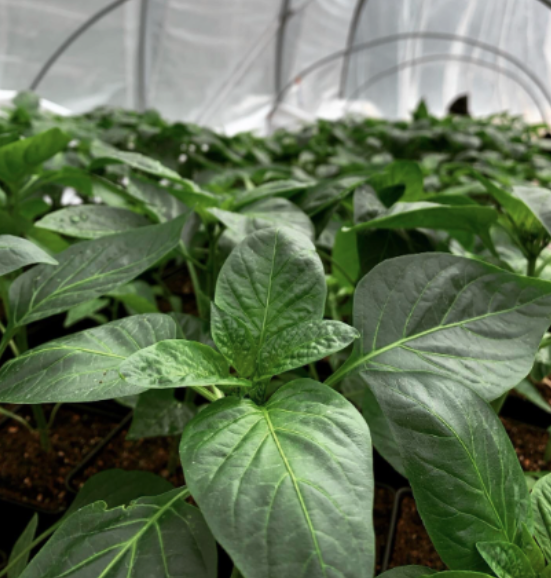
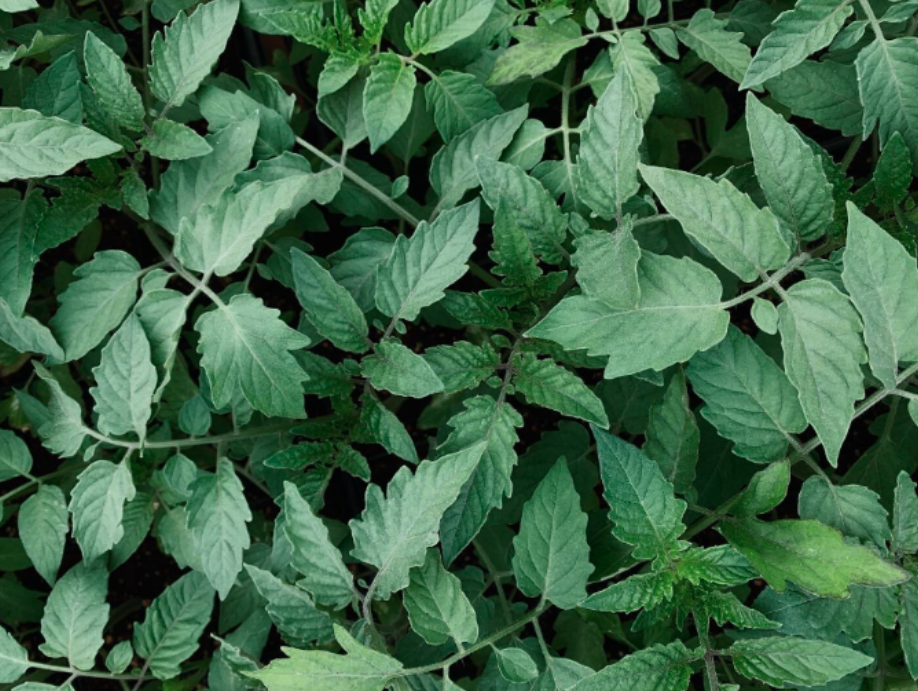
Our cherry tomato seedlings are about 2 feet tall and begging to get out of the greenhouse. It’s hard to be patient, but necessary for now. We have San Marzano, Pink Wonder, Moskovich, and Martha Washington tomato seedlings going as well. In the Pepper department, bell peppers are broad-leaved and thick-stemmed, constantly producing new flower buds that we are reluctantly picking off, reminding those impatient summer crops they have got to wait. Shishito peppers, Hungarian Hot Wax peppers, Jalapeños and Anaheims are building roots and shoots in the nursery as well. Cucumbers have sprouted and we just can’t wait to get the Squashes going!
It requires patience and knowledge that we are just beginning to pursue, but our perennial and wild edible plant population is showing some promise. We have young apple trees, a few of which have finally blossomed, Raspberries leaved and budding up, Serviceberry too, and we’ve planted a variety of edible native trees including Pawpaw, American Plum, and American Hazlenut. We may not have much of our own harvest this season, but with your help, we’re building an environment that is beautiful, diverse, and sustainable here. As is not uncommon this time of year, we’ve foraged a bit for wild spring harvests of Stinging Nettle and Chickweed but have yet to find a Morel mushroom anywhere on the property. In fact, David has never found one and it keeps him up at night. Next year’s going to be the year!
It’s May!
Being our first spring scaling up so significantly, we knew to anticipate a challenge. We’re not necessarily surprised by the difficulties and lessons we’ve faced thus far, but it’s been a dance. We converted our guest room into an indoor nursery- filling it up with tables and grow lights to get our seedlings a good, controlled start. From there, when the weather is cooperating, these babies move out to the hoop house and wait to be transplanted into an adequately-prepared garden row.
Only about a third of our land has been previously gardened, so there is a lot of soil amendment and construction going on. When there is time and energy, we like to prepare the soil for tilling with a manual broad fork, settler style. We’ve found that this process allows us to really observe and understand the soil we are working with and its condition. It has the added benefit of getting us into great shape! After ground is broken, we add compost for texture and soil food, some organic granular fertilizer to help feed the crops, and lime to help balance our acidic soil’s pH. In the field, we’ve used metal hoops and floating row cover to protect our crops from extra cold nights. This will come in handy at the end of the summer as well.
We’ve successfully germinated, nursed, & transplanted the following cool season crops, with which will will be filling CSA boxes and our table at farmers markets in May and June: Onions, Parsley, Thyme, Cabbage Varieties, Broccoli Varieties, Potato Varieties, Beets, Peas, Radishes, Oregano, Bok Choy, Kale, Spring Lettuce Mix, Baby Kale Mix, Spinach, Head Lettuces, and Carrots.
Some of these crops have created more challenges than others, but they are all alive and thriving in the first Spring garden block. We can’t wait to start providing for your family!
We strongly believe in the principles of regenerative agriculture. When we started raising sheep a few years ago, we wanted to do it the right way- on pasture in tight groups, without supplemental grain feed, moving often to keep from overgrazing (a la Joel Salatin). This is the first year that we are seeing the true fruits of our labor and discipline. We’ve had more biodiversity in our pastures, taller, richer grasses and legumes, and clearly happier, healthier sheep. We’ve incorporated some composted barn litter from our sheep and chickens into our first garden beds and the crops have thrived on the natural fertilizer.
We started with three pregnant ewes a few years back and today we have a vibrant flock of 22 ewes and lambs. Our rule of thumb is six ewes and their lambs per acre. With roughly two acres of pasture available, we are sitting right at our capacity.
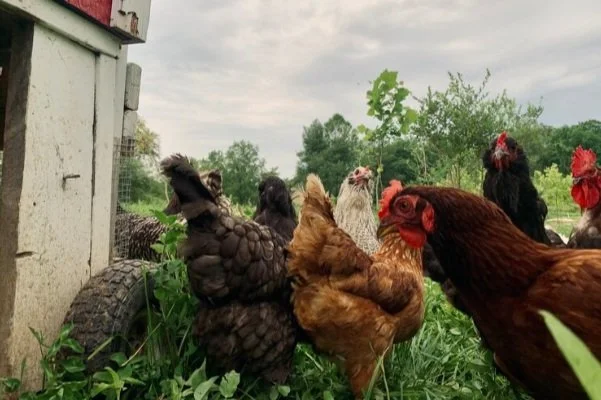
While our rooster population is getting ornery, our hens are loving the spring weather and are starting to increase their egg production. We have a mobile coop of laying hens trailing the sheep pastures and a group of free-ranging birds with the barn as their home base. As the farm’s biodiversity awakens, the diversity of the hens’ diet increases as well- making happy birds and healthy, deep-colored yolks.